Art. T0075
Table T0075
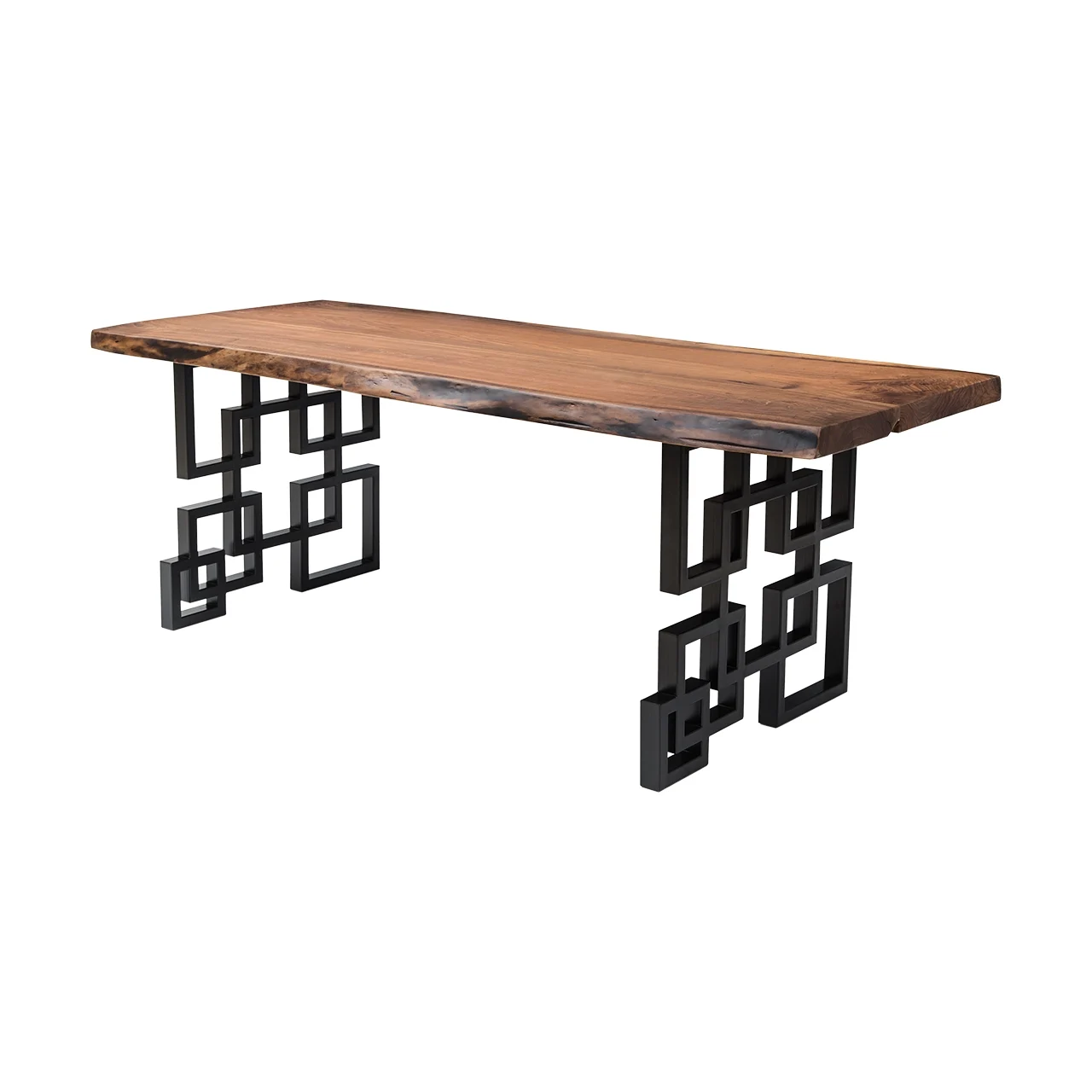
A table demonstrating masterful carpentry skills. The complex geometric “parquet layout” pattern on the tabletop creates a voluminous texture that you want to explore tactilely. The contrast of traditional handcraft with a technological steel frame makes this model ideal for interiors in the style of Soft-Industrial or modern modernism.
Features
- Premium materials.
- High wear resistance.
- Durable design.
Specifications
Related products
Tables define both seating capacity and service speed. A ten-centimetre error in tabletop size can cost a restaurant two covers in every row. This section covers dining, bar and coffee tables, plus tops and bases that can be combined to fit a specific floor plan.
Restaurant table sizes: protecting your covers
Allow 60–70 cm of tabletop width per guest. A 70×70 cm square table seats two; 80×80 cm seats four at a tight setting. Rectangular 120×70 cm tables comfortably seat four and line up easily for banquets. Bars and coffee shops usually work best with round tops of 60–70 cm.
Leave at least 90 cm between the chair backs of neighbouring tables, and 120 cm for the main service aisle. These numbers matter more than aesthetics — they decide whether staff can work during peak hours.
Tops and bases
Compact laminate (HPL), quartz agglomerate and porcelain stoneware handle heat, moisture and disinfection best. Solid oak and veneer look premium but need regular oiling and dislike standing water. Cast iron and steel bases with adjustable feet are essential wherever the floor is uneven.
Frequently asked questions
- What table size seats four in a restaurant?
- A 120×70 cm rectangular table or an 80×80 cm square one. Allow 60–70 cm of tabletop width per guest.
- Which tabletop survives hot dishes?
- Compact laminate (HPL), quartz agglomerate and porcelain stoneware tolerate heat and frequent disinfection without marking.