

Guide
Upholstery Fabrics for Restaurant Furniture: Martindale, Fire Safety, Cleaning
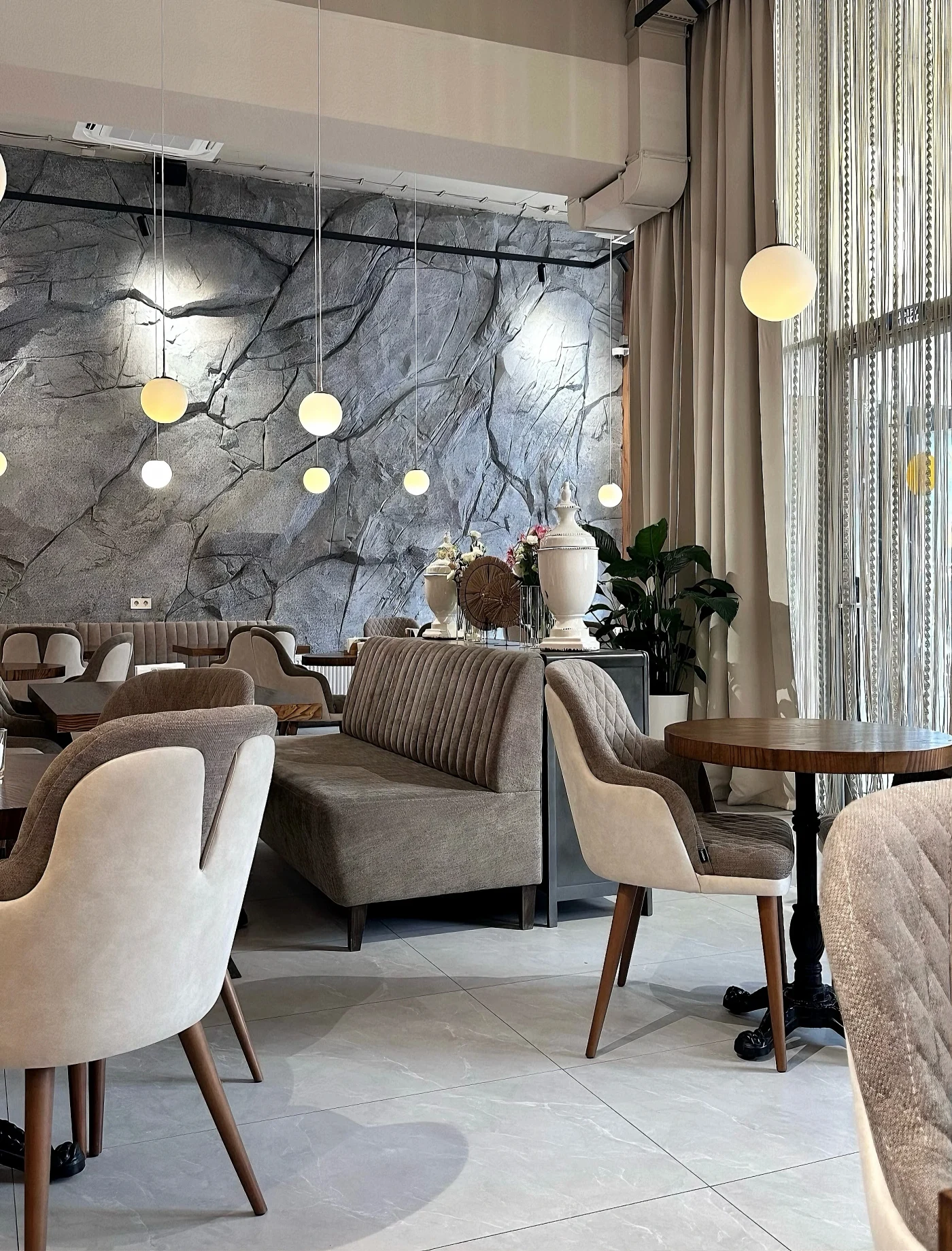
For cafes and restaurants choose upholstery rated at least 30,000 Martindale cycles, and 40,000+ for high-traffic areas; fire performance is proven by tests such as EN 1021 or BS 5852. Fabrics, faux leather and cleaning explained.
Cafe and restaurant furniture should be upholstered in material rated at least 30,000 Martindale cycles, and 40,000 cycles or more for high-traffic dining rooms, bars and food courts. The second must-check is fire performance, proven by test reports — for example to the European standard EN 1021 or the British BS 5852. The third is cleaning: the fabric must withstand wet cleaning and disinfectants without losing colour.
What is the Martindale test and what rating do you need?
The Martindale test (ISO 12947) shows how many abrasion cycles a fabric withstands before visible wear: a sample is rubbed with worsted wool in a figure-of-eight motion and the cycles are counted until threads break. More cycles means the upholstery keeps its look longer under daily use. Keep in mind that Martindale measures abrasion only. It says nothing about fading in the sun, stain resistance or behaviour during cleaning, so look at the whole fabric data sheet, not a single number.
Which Martindale rating for which venue
Benchmarks commonly used when specifying upholstery for contract furniture.
| Area and load | Abrasion resistance (Martindale) |
|---|---|
| Domestic furniture with occasional use | 10,000–15,000 cycles — not suitable for HoReCa |
| Hotel room, meeting room, low-traffic VIP area | 20,000–30,000 cycles |
| Cafe, restaurant, hotel lobby | 30,000–40,000 cycles |
| Bar, food court, high-turnover coffee shop, banquet hall | 40,000 cycles and more; many contract fabrics are rated 50,000–100,000 cycles |
A rating far above what the area needs does not make the fabric better: 100,000 cycles on a hotel-room chair pays for a property that is never used. Match the rating to the real load of each zone.
How is upholstery fire performance tested?
For furniture in public spaces, fire performance is proven by tests, not by a word in the description. The most common methods are EN 1021-1 (smouldering cigarette) and EN 1021-2 (match-flame equivalent), the European ignitability standards for upholstered furniture, and the British BS 5852, where contract furniture is often tested with the “crib 5” wooden ignition source. Fire resistance is either inherent in the fibre (keeps its properties after washing) or achieved with a treatment that can weaken after repeated cleaning. Ask the supplier for the test report on the specific fabric and check which requirements apply to your building — they are set by the project and the fire-safety review.
Fabric, faux leather or genuine leather: which to choose?
Faux leather (PU or PVC on a fabric backing) is the most practical choice for cafes, food courts and bar stools: it wipes clean, does not absorb odours or spilled drinks and tolerates disinfection; cheap grades crack at folds, so check abrasion and hydrolysis resistance. Upholstery fabric (hopsack, chenille, jacquard) gives a warmer, more “restaurant” look and breathes better; for HoReCa choose fabrics with a water- and stain-repellent finish. Velvet suits lounges and hotel lobbies but needs careful pile cleaning. Genuine leather lasts with proper care but requires regular conditioning and does not like aggressive disinfectants.
Upholstery by venue type
| Venue | Upholstery and abrasion rating |
|---|---|
| Coffee shop and food court | Faux leather or treated fabric, Martindale 40,000+ |
| Cafe and family restaurant | Water-repellent fabric or faux leather, Martindale 30,000–40,000+; dark and melange colours hide signs of use |
| Fine dining | Upholstery fabric, velvet or leather, Martindale 30,000+; the focus is on look and feel |
| Bar and bar stools | Faux leather, Martindale 40,000+; fabric only if treated and in dark tones |
| Hotel lobby and lounge | Velvet, chenille or treated fabric, Martindale 30,000–40,000+; fire performance as required by the project |
| Hotel room | Fabric 20,000–30,000+; colour fastness to light near the window matters more |
| Terrace | Outdoor acrylic or polyester fabrics with UV protection and quick-dry foam only |
What else to check besides Martindale?
Pilling is rated under ISO 12945 on a 1–5 scale; restaurants need grade 4 or higher. Light fastness — resistance to fading — is tested under ISO 105-B02 on a 1–8 scale; for seats near windows and on verandas aim for 5 or higher. Colour fastness to rubbing (dry and wet) shows whether the fabric will stain guests’ light clothing. Fabric weight (g/m²) is an indirect sign of durability. Finally, read the cleaning code on the label: whether wet cleaning is allowed and which products the fabric does not tolerate.
How to clean upholstery in a cafe or restaurant?
Daily: vacuum with an upholstery nozzle and treat stains immediately — blot, do not rub. Wipe faux leather with a damp cloth and mild soapy water, then dry; frequent alcohol or chlorine products dry out the coating, so use disinfectants approved by the fabric maker. Clean treated fabrics with foam or a damp cloth without soaking. Every 3–6 months do a deep clean with an extraction machine or a professional cleaning company.
Can you choose your own fabric at SANDALUCI?
Yes. We make furniture upholstered in the client’s choice of fabric and to the designer’s drawings — SANDALUCI runs its own production, with factories in Istanbul and Almaty. Fabric and faux-leather samples can be seen in our Almaty showroom (193g Zhangeldin St; Mon–Fri 09:00–19:00, Sat 10:00–15:00). For each fabric in your project, ask the manager for abrasion and fire-test data and record them in the specification attached to the contract. Upholstered models: sandaluci.com/en/products/indoor-chairs and sandaluci.com/en/products/lounge.
FAQ: restaurant upholstery fabrics
What Martindale rating does a restaurant need?
30,000–40,000 cycles for a dining room; 40,000 cycles or more for bars, high-turnover coffee shops and banquet halls.
Fabric or faux leather for a cafe?
Faux leather is easier to clean and tolerates disinfection; water-repellent fabric looks warmer. Food courts and bar stools usually get faux leather.
How do I check that a fabric is fire-resistant?
Ask for the test report on that fabric, for example to EN 1021-1/2 or BS 5852, and confirm the requirements for your building with the project designer.
How do I clean velvet?
Vacuum with a soft nozzle along the pile and use upholstery foam; blot stains rather than rub. Deep clean every 3–6 months.
Can I change the fabric after ordering?
The fabric is fixed in the specification before production starts. Re-upholstering later is possible but is a separate job, so approve samples early.
Where can I see fabric samples?
In the SANDALUCI showroom in Almaty, 193g Zhangeldin St: Mon–Fri 09:00–19:00, Sat 10:00–15:00.
Catalogue sections related to this article
Related articles
.webp)
Have questions? Contact us
Contact a manager